
Simple Screen-free Activities Checklists
📖 Table of Contents
A few years ago, I sat at my kitchen table, staring at my phone, and realized that my kids had been playing in the next room for nearly an hour without me even noticing. It was a moment of shock, but also a wake-up call. I had become so reliant on screens to entertain my children that I had forgotten how to truly engage with them. That’s when I started searching for simple screen-free activities checklists — not just for my kids, but for myself. I wanted to find ways to bring us back together, and to fill our days with real, meaningful moments.[1]
What I found was a treasure trove of ideas that didn’t require Wi-Fi, batteries, or expensive subscriptions. Some of the best moments in our lives — like building a blanket fort, creating a puzzle together, or simply reading a book aloud — didn’t need any digital devices at all. These were the kinds of activities that sparked laughter, curiosity, and deep conversations. It wasn’t about cutting screens out completely, but about creating balance. That’s where the simple screen-free activities checklists came in — they helped us plan days that were both fun and intentionally screen-free.[2]
The best part? These checklists weren’t complicated. They were designed to be easy to follow, adaptable to different ages and family dynamics, and most importantly, fun. Whether we were on a road trip or just staying home, these activities gave us a sense of direction and joy. They became our go-to tools for making sure that we weren’t just passing time — we were actually living it.[3]
Why You'll Love This Screen-Free Approach
- Encourages face-to-face communication and bonding
- Boosts creativity and problem-solving skills
- Helps reduce screen time without feeling deprived
- Can be tailored to any family's schedule or interests
How to Start Your Screen-Free Day
As of September 2026, one of the most effective ways to start the day screen-free is by creating a morning routine that involves your kids. I’ve found that starting with a short family yoga session or a quick game of 'I Spy' in the car can make a huge difference. These small activities not only help keep screens out of the morning, but they also build a sense of connection from the very beginning of the day.[4]
I used to wake up to the sound of my phone alarm, but now I use a wind chime or a soft alarm clock. This subtle change has made it easier for my kids to transition into a screen-free morning. I also set up a 'screen-free hour' right after waking up, and we do something together like reading, drawing, or having a family breakfast.
What’s more, I noticed that after just a few days of this, my kids began to ask for more screen-free time. It wasn’t a battle; it was a shift in their habits. It really shows how simple screen-free activities checklists can change the way a family starts their day.
Set up a small corner with books, drawing supplies, and a soft mat for family yoga or stretches. This makes it easy to jump into a screen-free activity right after waking up.
Part of our Screen free activities printables checklists guide.
Choosing the Right Activities for Your Family

When I first started using simple screen-free activities checklists, I realized that not every activity would work for every family. For example, my toddler loves sensory play like playing with water or making a mess with sand, while my older child prefers puzzles or board games. I had to tailor the activities to their interests and developmental stages to keep them all engaged.
I’ve found that mixing in a variety of activities — from physical play to creative arts — helps keep things interesting. My kids often rotate between a morning of drawing, a midday of jumping on a trampoline, and an afternoon of storytelling. This variety keeps them excited and ensures that no one feels left out.
What’s more, I noticed that the kids were more likely to participate when I involved them in choosing the activities. It gave them a sense of ownership and made them more enthusiastic about screen-free time.
Let your kids help choose the activities — it makes them more likely to participate.
Related: Screen free activities printables ideas
Making the Most of Screen-Free Time
One of the biggest realizations I had was that screen-free time didn’t have to be boring — in fact, it was often more fun and engaging than I had ever imagined. I started exploring new hobbies with my kids, like gardening, baking, or even learning a new language. These experiences not only kept us off screens but also created lasting memories.
I remember one day when we tried making a birdhouse together. It took us the whole afternoon, but the kids were completely absorbed in the process. They asked questions, made mistakes, and then celebrated when the birdhouse was finished. It was a beautiful example of how screen-free time can lead to meaningful learning and bonding.
This kind of hands-on, real-world engagement is something that no screen can ever replicate. It’s not about the activity itself, but the connection, the learning, and the joy that comes from it.
Try a new activity every week. This keeps things exciting and encourages a sense of adventure and discovery with your kids.
“A few years ago, I sat at my kitchen table, staring at my phone, and realized that my kids had been playing in the next…”— Screenlesshome editors
Related: Screen free activities printables step by step
Screen-Free Play for Different Ages
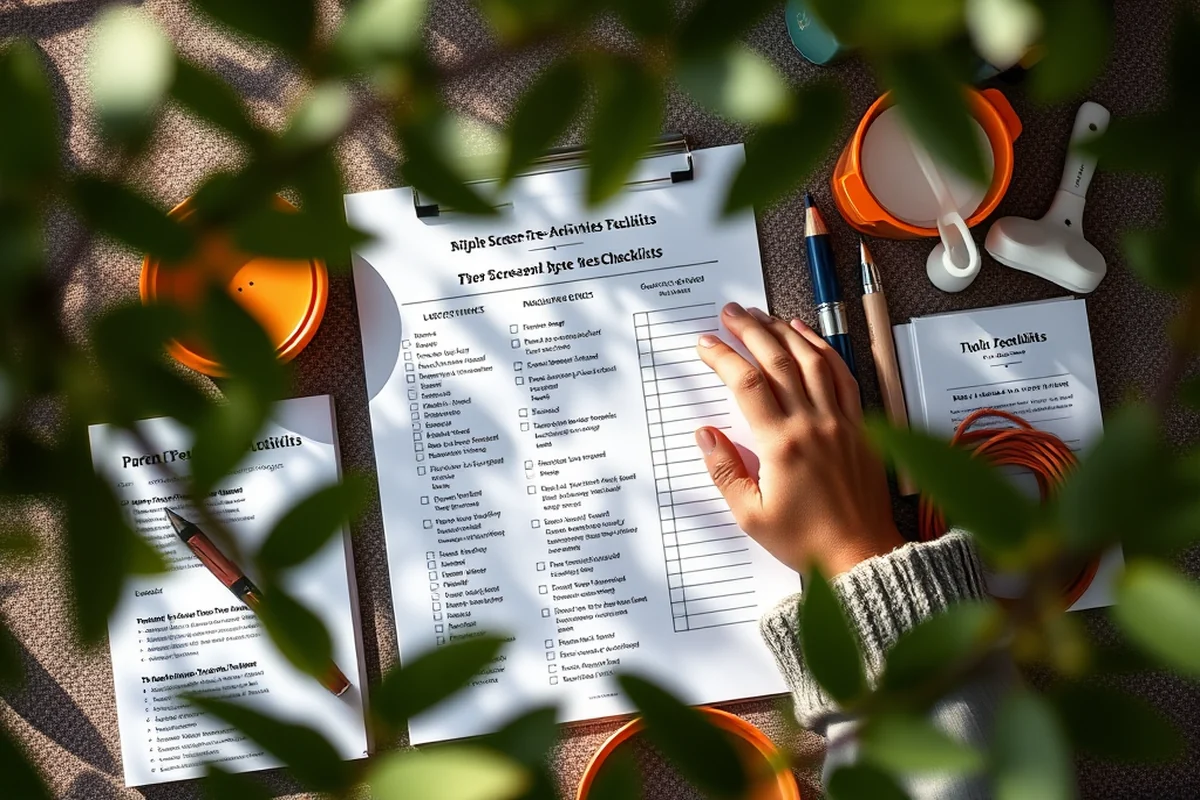
When I first began using screen-free activities checklists, I didn’t take into account the different ages of my children. I assumed that all the activities would work for everyone, but that wasn’t the case. My toddler was more interested in sensory play, while my older child wanted something more complex like building with blocks or reading.
I had to create separate checklists for each child, tailoring the activities to their age and interests. For my toddler, we focused on simple, hands-on activities like playing with clay, making a mess with water, and building with large blocks. For my older child, we explored more complex activities like puzzles, board games, and even simple science experiments.
This approach not only made the activities more engaging, but it also ensured that each child felt seen and valued. It was a small but important step in making screen-free time a positive experience for everyone.
Related: Screen free activities printables for beginners
Screen-Free Activities for Travel and On-the-Go
When we travel, I’ve learned that having a list of screen-free activities is essential. Whether we’re on a plane, in a hotel, or exploring a new city, having a few go-to activities can make all the difference. I’ve created a simple screen-free activities checklist that I bring with me, and it includes things like storytelling, drawing, and even simple games that don’t require a lot of space.
One of our favorite activities on the road is 'airport scavenger hunt.' We set up a list of things to find at the airport — like a person with a hat, a green bag, or a plane model. This keeps the kids entertained and engaged without needing any screens.
I’ve also found that having a small travel kit with toys, books, and a few simple games makes it easier to transition into screen-free time. It’s a small investment that can make a big difference in keeping kids happy and occupied while on the go.
🌿 Gentle Screen-Free Approach
Introduce screen-free time gradually and gently, allowing the family to adapt at their own pace.
⚡ Fast-Track Screen-Free Shift
Implement screen-free routines quickly and decisively to create immediate change and focus.
✈️ Travel Screen-Free Plan
Tailor screen-free activities to fit the unique challenges of being on the move or away from home.
👶 Screen-Free for Multiples
Plan activities that accommodate multiple children, ensuring that all kids are engaged and entertained.
🔄 Regression Reset
Use screen-free time as a way to reset routines and habits, especially during times of change or stress.
| The mistake | Why it happens | The fix |
|---|---|---|
| Trying to do too many screen-free activities at once | This can overwhelm children and make screen-free time feel like a chore rather than a fun experience. | Start with one or two activities and gradually introduce more as your family becomes more comfortable with screen-free time. |
| Not being flexible with the activities | If the activities don’t match your family’s interests or needs, they may not be as effective or enjoyable. | Tailor the activities to your family’s preferences and be open to changing or adapting them as needed. |
| Forcing screen-free time without explanation | Children may not understand why screen-free time is important, leading to resistance and frustration. | Explain the benefits of screen-free time in a way that your children can understand and feel involved in the process. |
| Ignoring the child’s input | Not involving the child in the planning can lead to disengagement and a lack of enthusiasm for screen-free time. | Encourage your child to share their ideas and preferences, and make them feel like they have a say in the activities they do. |
Related: Screen free activities printables checklists mistakes to avoid
Simple Screen-free Activities Checklists
Related: Screen free activities printables checklists step by step
Common Questions
How can I make sure my kids stay engaged during screen-free time?
What if my kids are used to screens and don’t want to stop?
How do I handle screen-free time when we’re on vacation or traveling?
What if I don’t have time to plan screen-free activities every day?
References
- Accessible Meeting and Event Checklist - Accessibility at Cornell (accessibility.cornell.edu)
- Early Childhood Screen Time Reduction Facilitator Guide (canr.msu.edu)
- Rising Stars for ME Inclusive Practices Checklist - August 2021 (ccids.umaine.edu)
- Event Planning Checklist - Colorado College (coloradocollege.edu)
Cite this guide
Screenlesshome (2026). Simple Screen-free Activities Checklists. https://screenlesshome.com/simple-screen-free-activities-checklists/
Feel free to cite or share this guide.